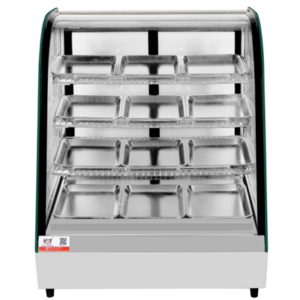
Vertical refrigerated cabinets are essential for commercial kitchens, pharmacies, and laboratories, offering optimized storage with space-saving designs. Here’s a breakdown of their core structural characteristics:
- Insulated Panels
Constructed with polyurethane foam (PUF) or VIP (Vacuum Insulated Panels) for superior thermal efficiency (-value ), reducing energy loss by . - Cooling System Layout
- Airflow Design: Vertical cabinets use top-down forced convection (fan-assisted) for uniform temperature distribution (± variance).
- Evaporator Placement: Located at the rear or top to minimize frost buildup and maximize storage space.
- Shelving & Load Capacity
- Adjustable Chrome Wire Shelves: Support up to and resist corrosion in high-humidity environments.
- Sliding Rails: Enable easy access to rear items without disrupting cold air circulation.
- Door Mechanisms
- Double-Pane Glass Doors: Reduce heat transfer (-value ) with heated door frames to prevent condensation.
- Magnetic Gaskets: Ensure airtight seals (leakage rate ) to maintain internal humidity levels.
- Compressor & Condenser Integration
- Bottom-Mounted Scroll Compressors: Provide quieter operation () and higher COP () compared to reciprocating models.
- Remote Condensers: Optional for heat dissipation in compact spaces.
Applications: Ideal for supermarkets (beverages), labs (samples), and hospitals (vaccines) requiring vertical space optimization and consistent cooling.